You have completed your training, logged your days in the hills and now all that’s left is the assessment!
Your training equipped you with the practical skills, knowledge, and judgement you’ll need to be successful on your three day HML assessment. It includes the key areas of the syllabus, it’s up to you to consolidate your skills, practise, research and prepare for the assessment.
Here are a few tips to help you on your way:
Understand what really matters
Navigation, judgment calls, group management aren’t just bullet points in the syllabus; they are the core of what you’ll be assessed on. Familiarity with the syllabus is essential, but deeper than that is an understanding of why we do each skill and when to apply it.
For me, this meant hours with maps after walks, debriefing and self reflecting asking myself questions like; Did I make that decision because it was the easiest or because it was right? What went well? What would I do differently next time? This kind of reflection sharpens judgment and that matters in assessment.
Embrace the QHMDs don’t let them become a chore
“Quality Hill & Moorland Day” can sound like just another box to tick, a number to achieve before assessment. In reality, it’s a chance to grow your confidence and autonomy in the hills & moorland. Enjoy it!
Remember it isn’t just a walk, it’s about planning the route, navigating without a set path, making key decisions with real time spent in challenging terrain in a variety of weather conditions. Get out and lead when you can, even small group leadership opportunities help your instincts shift from reaction to intention.
Get Comfortable Being Uncomfortable
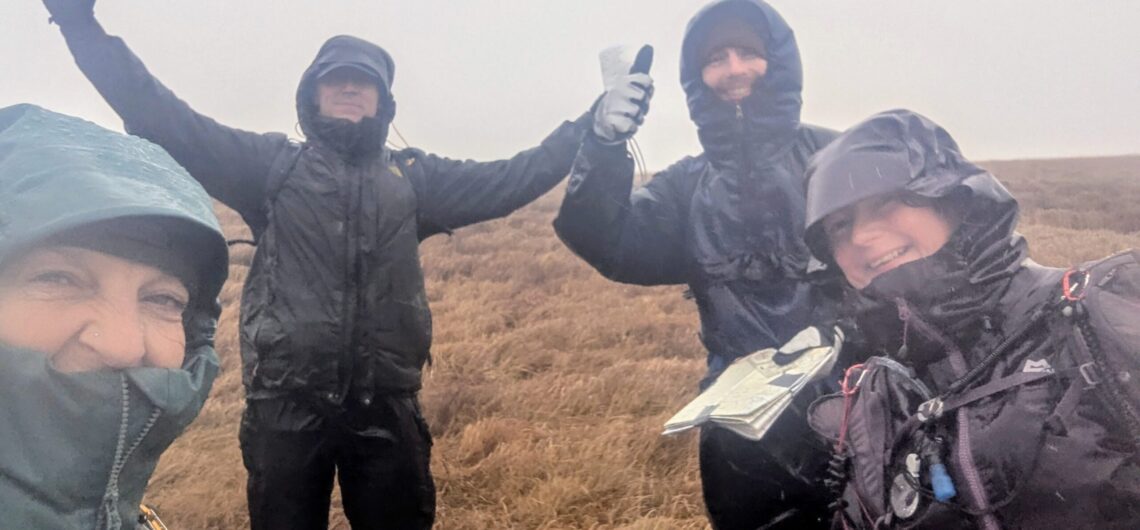
There’s a difference between knowing how to use a compass and using one even when it’s raining heavy and strong winds, your group is tired, and the path ahead looks like a maze of bog and boulders.
‘Train hard fight easy’
Simulate pressure: Practice navigation with teammates, simulate longer days, put yourself in scenarios where you have to make quick, real choices. Practice night navigation.
Mental resilience: remember that fatigue and discomfort are part of the process, every leader before you has felt it too, it will make you a better leader.
Pack well and know your gear inside out
The gear you use on assessment should feel like an extension of yourself, not a surprise. Pack and practise with the kit you will use on assessment, so you’re fluent when it matters. All your kit should support your leadership, not slow you down.
Know how to:
Set up shelter quickly in the rain
Adjust layers without breaking team momentum
Use your compass and manage the map confidently under pressure
Keep your group motivated
Go in with the right headspace
Most of the anxiety around assessment comes not from the skills involved but from being watched while demonstrating them.
Remember assessors aren’t trying to trip you up. They’re there to see if you can lead safely, confidently, decisively and safely. Relax, stay present and trust in the preparation that you have put in. It’s up to YOU to show the assessors how great you are!
Yes, you might make a mistake, most people do. What matters is how you deal with it.
Own it, reset, and move on, honesty and resilience are leadership qualities.
Finally this is a LEADERSHIP award, always be mindful of your group, be the leader you would want. I want a leader that inspires me, that is knowledgeable and safe!
And so to summarise…..
Preparation
- Know the syllabus inside-out – use the official Skills Checklist to track your strengths and gaps.
- Accumulate Quality Hill & Moorland Days (QHMDs) – aim beyond the minimum 40 in varied terrain and conditions to build real confidence.
- Log your days properly in DLOG with clear notes on leadership and navigation so your experience is easy for assessors to understand.
- Build your surrounding knowledge e.g. legislation, environmental.
Navigation & Technical Skills
- Hone core navigation – map & compass without relying on GPS; practise relocations and night navigation.
- Learn advanced techniques – handrailing, attack points, aiming off, etc., to navigate efficiently and confidently.
Leadership & Group Management
- Walk like a leader – steady pace, aware of group needs, able to talk while walking.
- Communicate clearly and confidently – briefings, hazard awareness, adapting to personalities.
- Make safe, sound decisions and be ready to explain your choices.
- Think about ways to communicate clearly and how to manage different groups.
Attitude & Assessment Mindset
- Be organised and prepared – good habits matter.
- Stay calm and present – it’s about competence and confidence, not perfection.
- Enjoy the process – allow your passion for the hills & moorlands to shine through.
Below are listed some additional resources: I used them all!
GOOD LUCK YOU CAN DO IT!
Hill & Moorland Leader resources including the HML handbook, HML syllabus check list and notes for assessors.
https://www.mountain-training.org/qualifications/walking/hill-and-moorland-leader#Resources
Hill Walking by Steve Long
https://www.mountain-training.org/shop/product/?productId=113
Nature in Snowdonia by Mike Raine (helpful for many areas, not just Snowdonia!)
https://www.mikeraine.co.uk/product/nature-of-snowdonia
Improvers Navigation workshop
https://ngmountaineering.com/courses/improvers-navigation/
Contour Masterclass
https://ngmountaineering.com/courses/contour-masterclass/
Outdoor First Aid Course
https://ngmountaineering.com/courses/2-day-outdoor-first-aid/