So why do we need to learn the skills of navigation using a map and compass? GPS is becoming more advanced and accurate, so is using a map and compass becoming obsolete?
GPS, and the many apps we can download to help us route plan and navigate, can be a welcome aid when venturing out to the hills and mountains. It’s simple, just choose a route, click a button and off we go. We follow the arrow on the screen and we know exactly where we are, with little chance of getting lost, it’s reassuring. Actually it is so quick and accurate that I think we need to ask the question ‘Is it negligent to go out without it?’ I am old school, I love the map and compass, however even I have now succumbed to always carrying some form of GPS. There are so many advantages to GPS, most importantly, safety. Using location apps such as OS locate, can give you your accurate grid reference number at a touch of a button. Planned routes can be shared with your ‘check in’ contact.
In all of our courses we talk about GPS and the value of using them. In fact we also provide specialist GPS courses and ultra running preparation courses where a large element is using GPS effectively.
So what are the advantages of the map and compass?
The obvious one is it doesn’t run out of battery, break or suffer in limited coverage areas, of course we can, and should, always bring a battery charger. But it is so much more than just this. To use GPS effectively you really will benefit from an understanding of maps and terrain. There have been several fatal and near fatal incidents recently where people have blindly followed a route they found on a GPS app, such as All Trails, and got into difficulty. The problem with these routes is that they are community created routes which aren’t verified. You are relying on someone else and have no awareness of the accuracy of the route or the accuracy of their GPS device whilst recording the route, or the level of experience or fitness required, descriptions are subjective. Having an awareness of the terrain you will cover, steepness of ground, length of time it might take you is all vital to staying safe and having a great day out. So even when using GPS a basic knowledge and experience of using maps is vital.
So what else?
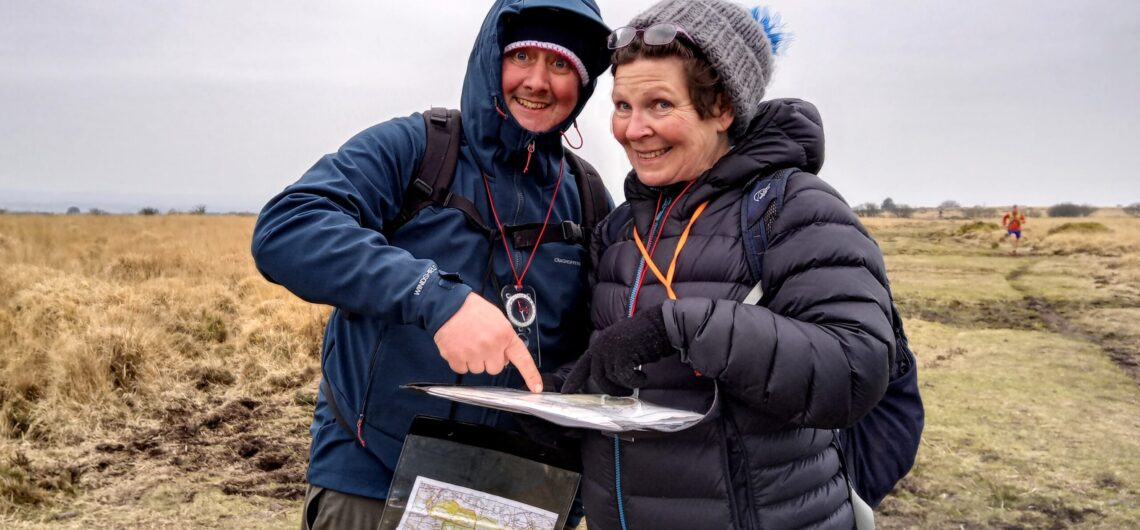
Using a map and compass offers a very different experience. Getting the map out and working out our options gives us the ability to choose an interesting, suitable route. What we want from our days hiking can vary dramatically, depending on a range of reasons including, who we are with, where we are, what weather we have, what we want to see, how much time we have and how fit we are. By studying the map we can choose suitable ground, length and distance along with picking out any interesting features, such as stone circles and stunning view points. We can also easily make adjustments during our day if needed. For example if one of our group gets tired and we can choose to shorten the route, of course if we are walking faster than anticipated we can make alterations adding an extra point of interest.
When we follow a map, rather than GPS, we tend to engage with our environment, having a better perception of where we are and what’s around us. For example we are prepared for the steeper grounds, any hazards we may come across such as stream crossing, and we’ll have an idea of where the best rest stops are.
But even more than all this, there have been studies to suggest there are huge benefits to our brain health by using maps.
Neuroscientists, more specifically John O’Keefe in the 1970’s and Edvard and May-Britt Moser in 2004, discovered that we have specific neurons, which they named Grid & Place cells, which combined provides us with a ‘built in’ navigation system in our brains, one of the basic primaeval survival mechanisms to keep us safe. Further studies by neuroscientists such as Mar Gonzalez-Franco, Ph.D. & Veronique Bohbot Ph.D., have recorded that GPS is actually limiting our awareness and sense of our environment. Planning your own route involves a creative process in the brain whereas following GPS is a more simple process of following strict directions. Spatial map strategy, the gradual creation of 3D mapping in the brain, involves these place and grid cells in the hippocampus, an area generally used to encode new memories about experiences (called episodic memories). Increased hippocampus activity enables this area to grow and causes healthy brain activity.
In fact, it has been noticed that using GPS regularly can cause atrophy in the hippocampus. Another neuroscientist, Lisa Mosconi Ph.D., has seen that in subjects at risk of and in the very early stages of Alziehmers it is the grid cells that are the first to be affected and show signs of Alziehmers so any atrophy is increasing the risk of the onset of Alziehmers.
Using a map and compass is very unique; it fires up the creative part of our brain when we build, visualise and imagine our route. It activates the logical side of our brains when we work out distances, timings and set compass bearings. Then we actually get to physically put all this into reality! Our brains are kept active, engaged, and overall more creative and adventurous. Using a map and compass really does keep our brains healthy!
For me navigation is all this and so much more. Learning and practising good basic navigation using a map and compass is essential for safety and enjoyment in the hills and mountains. Of course GPS does play a role in this and it would be foolhardy to completely ignore this. However, GPS is certainly not a replacement to the map and compass. There is something very liberating and empowering in picking up a map choosing where I want to go and how to get there. I love the process of studying the map and preparing a route. I visualise what I will see on the journey and how hard the terrain will be. I disconnect from the busy digital world and take control of myself and where I go. I don’t simply follow a route given to me by someone else, I choose. This keeps me healthy, both in mind and body.
Check out our Navigation Courses here
Further reading:
https://www.vox.com/2015/9/2/9242049/gps-maps-navigation
https://www.scientificamerican.com/article/how-gps-weakens-memory-mdash-and-what-we-can-do-about-it/
https://www.sciencedirect.com/science/article/abs/pii/0014488676900558
https://www.nobelprize.org/uploads/2018/06/edvard-moser-lecture.pdf